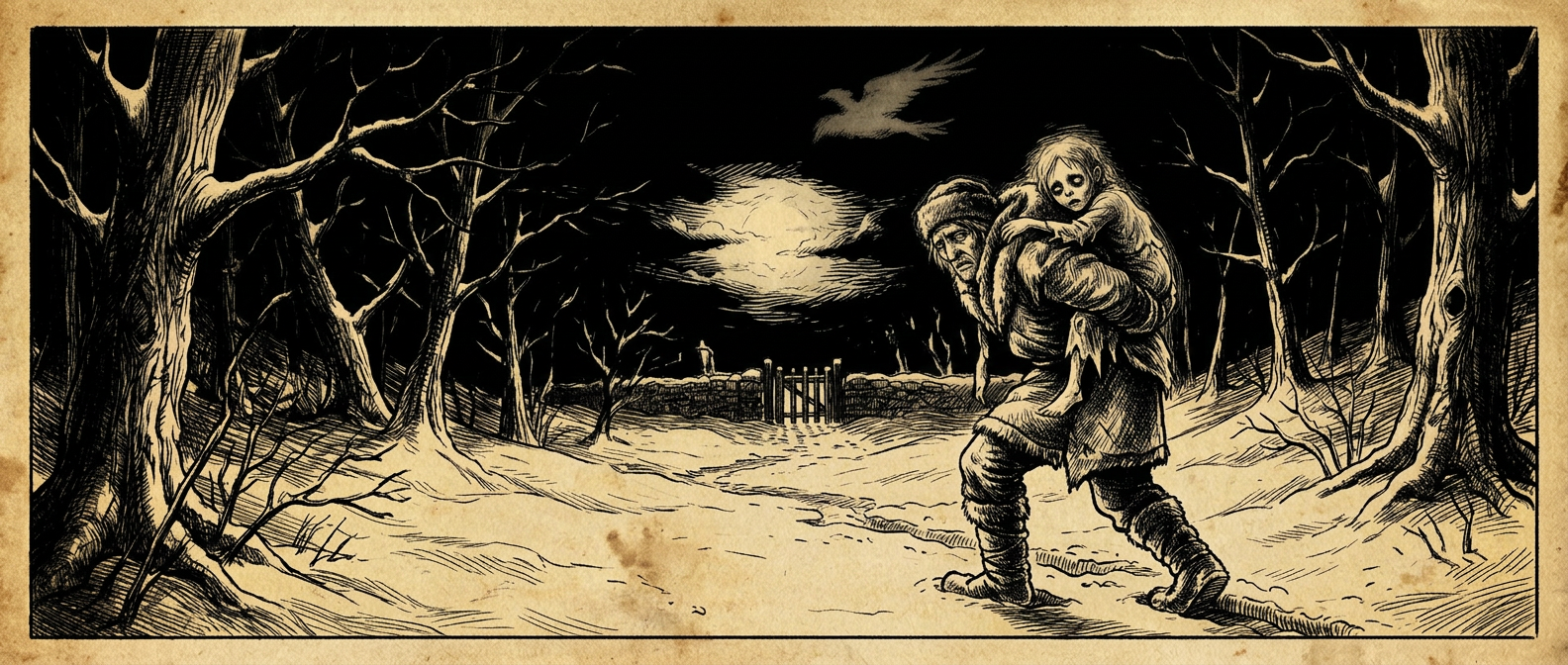
Utburd — The unbaptized child that will not rest
The ghost of an exposed or murdered newborn, denied baptism and burial. It cries from the place it died, or springs onto a lone traveler's back demanding to be carried to consecrated ground — heavier with every step. Behind the lore stood real law and real names.
A hollow off the path. A bog at the foot of a slope. A cairn at the forest edge, half pulled down by frost. These were the places a child had been carried out and left — and the places where a traveller at dusk might hear one crying among the trees, and find, following the sound, nothing, or a small bundle of bones at the foot of a stone.
The utburd was the ghost of a newborn killed or abandoned by its own family and denied baptism and burial in consecrated ground. The name is the noun for both the act and the spirit it made — from ut, out, and burd, a thing borne; from its crying it was also called a ropar, a crier, and Scandinavian tradition more widely knew it as the myling. Shut out of the churchyard, the child could not enter it on its own. It stayed where it had been left. There was one release the tradition allowed: give it a name. A woman who kept her head could still the crying with an emergency christening spoken into the dark — «Eg døyper deg på ei von, anten Sigrid eller Jon» — I baptize you on a chance, whether Sigrid or Jon.
It did not always stay quiet. Walk the path after dark and it would spring onto the back of the first lone traveller and ask to be carried to the churchyard gate. The bundle was light at first, the weight of a newborn; by the first turn of the path it had the heft of a toddler; by the second the weight of a grown man; and by the time the carrier reached the wall of consecrated ground he was on his knees, his back bent double, his boots driving through the snow. The moment he crossed the wall the weight was gone and the bones dropped behind him. In some tellings the voice came back years later, at the mother’s own wedding, under the wedding music, and only the bride could hear it. Some versions gave it wings — the nattravn, the night-raven, the utburd risen into the air to cry over the bogs.
The state took the offence seriously enough to write it into law. Christian V's Norske Lov (1687) 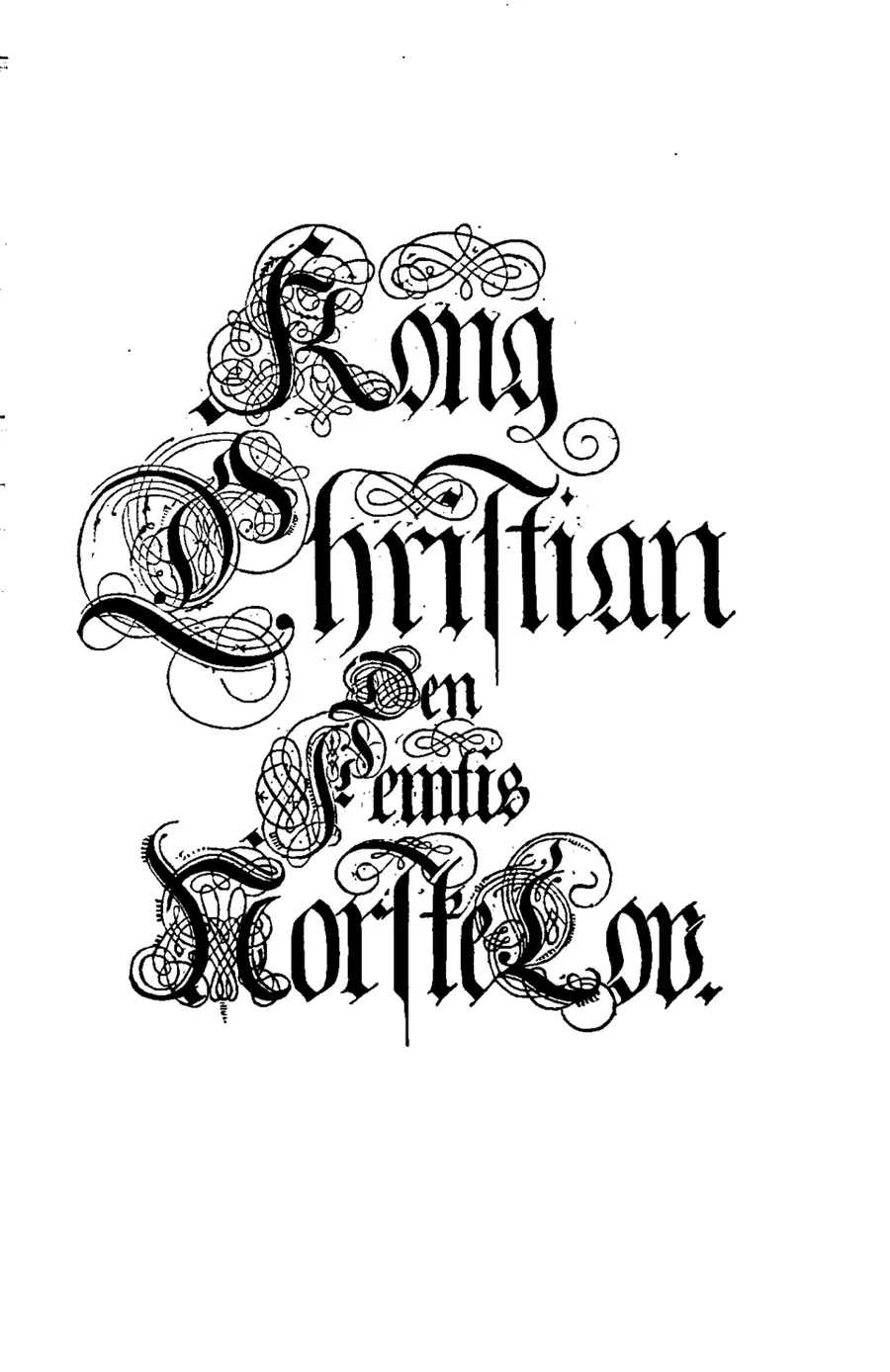 Title page, Kong Christian den Femtis Norske Lov (1687), from Otto Mejlænder's edition (Christiania, 1883) The engraved black-letter title page of King Christian V's 1687 Norwegian Code — the law book whose Sixth Book made concealed birth and child-exposure capital crimes, and parts of which remain in force today. Kong Christian Den Femtis Norske Lov — King Christian V's
Norwegian Code, promulgated 15 April 1687, in force from
1688. A wholly new code, drafted by four Norwegian jurists
adapting the Danish Code (Danske Lov, 1683); it replaced —
rather than revised — Christian IV's 1604 Danish translation
of the medieval Landslov. Its Sixth Book, on crimes, was
ordered after the Ten Commandments. A woman who concealed
her pregnancy, gave birth in secret (fødsel i dølgsmål),
and whose child then died or vanished was presumed to have
killed it with intent; laying a child out on desolate ground
made the exposer a manslayer — both capital crimes. Book Six
governed criminal law until the Criminal Code of 1842;
portions of the code remain in force, the oldest legislation
still operative in Norway.
Also discussed in Bytting — the changeling left in the cradleThe 400-Year Night — when the Northern Lion lay dormantThe Golden Age — a North Atlantic empire … reaching farther than you think set down both crimes at once: to lay a child on wild ground where people did not come made you a manslayer, to forfeit your life; and a woman who gave birth in secret — fødsel i dølgsmål — and could not account for the child was presumed a murderer until she proved otherwise. Between 1789 and 1799, more Norwegian women were convicted of concealed birth than of any other kind of murder. The death penalty for it stood until the Kriminallov of 1842.
Title page, Kong Christian den Femtis Norske Lov (1687), from Otto Mejlænder's edition (Christiania, 1883) The engraved black-letter title page of King Christian V's 1687 Norwegian Code — the law book whose Sixth Book made concealed birth and child-exposure capital crimes, and parts of which remain in force today. Kong Christian Den Femtis Norske Lov — King Christian V's
Norwegian Code, promulgated 15 April 1687, in force from
1688. A wholly new code, drafted by four Norwegian jurists
adapting the Danish Code (Danske Lov, 1683); it replaced —
rather than revised — Christian IV's 1604 Danish translation
of the medieval Landslov. Its Sixth Book, on crimes, was
ordered after the Ten Commandments. A woman who concealed
her pregnancy, gave birth in secret (fødsel i dølgsmål),
and whose child then died or vanished was presumed to have
killed it with intent; laying a child out on desolate ground
made the exposer a manslayer — both capital crimes. Book Six
governed criminal law until the Criminal Code of 1842;
portions of the code remain in force, the oldest legislation
still operative in Norway.
Also discussed in Bytting — the changeling left in the cradleThe 400-Year Night — when the Northern Lion lay dormantThe Golden Age — a North Atlantic empire … reaching farther than you think set down both crimes at once: to lay a child on wild ground where people did not come made you a manslayer, to forfeit your life; and a woman who gave birth in secret — fødsel i dølgsmål — and could not account for the child was presumed a murderer until she proved otherwise. Between 1789 and 1799, more Norwegian women were convicted of concealed birth than of any other kind of murder. The death penalty for it stood until the Kriminallov of 1842.
The archives keep names. On 14 January 1778, at Krossvegen under the farm Fossheim in Bø, Telemark 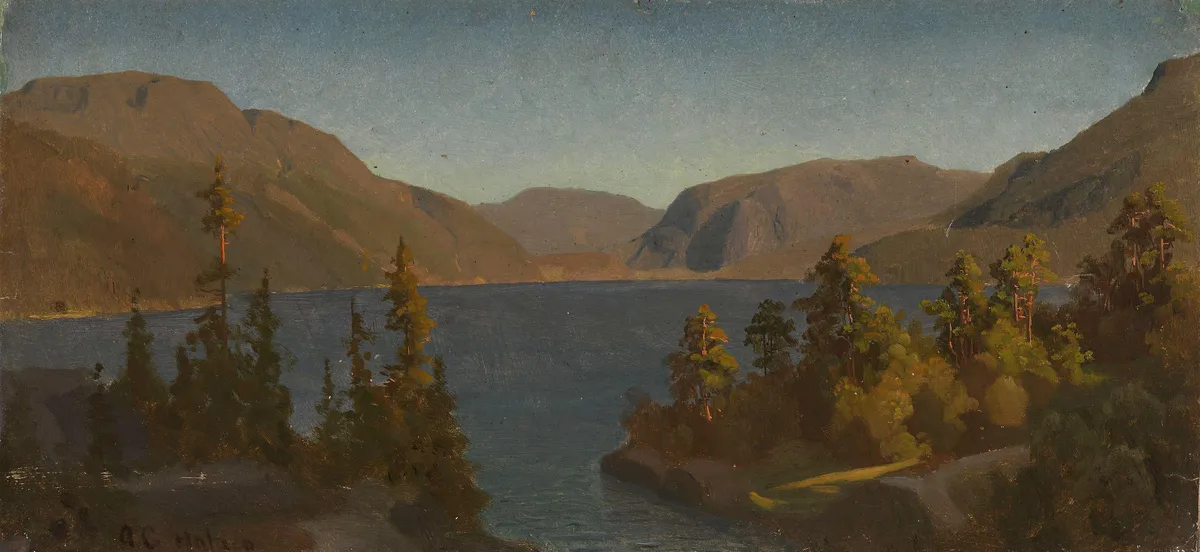 August Cappelen, Innsjø i Telemark (NG.M.02409), National Museum of Art, Architecture and Design Cappelen's *Innsjø i Telemark* — still water lying empty between the mountains, no one in the scene. This is the inland parish country the record comes from: at Bø, in this same interior, the parish register set down the 1778 case the article follows. Historic region and county in the inland-southern part of
Norway, between the southeastern coast and the central
Hardangervidda plateau. Home to Heddal Stave Church — the
largest of the twenty-eight surviving Norwegian stave churches,
standing nearly thirty metres tall — and to the heavy-water
production facility at Vemork whose sabotage by Norwegian
commandos in February 1943 disrupted the German atomic-weapons
programme. The name Telemark also gives the world the modern
ski-turn technique developed there in the nineteenth century.
In the folklore record Telemark is the deepest vein of all —
the landscape of the ballad collectors, the hardingfele
legends, and the lake serpent of Seljord.
Telemark Also discussed in A Catholic Norway — the faith that gave the kingdom its first institutions and the stave churchesWorld War II — the King’s “No” and the Nazis in NorwayThe Long Fall — the sudden loss of Norwegian nobility, the end of the kings, and half of Norway gone foreverFossegrimen — the waterfall fiddler who teaches you to playTroll — the monsters of the mountainsÅsgårdsreien — the storm that rides through the winter skyHuldra — the girl in the forest with a secretSjøormer — the serpents in the deep lakes and fjords , a servant girl named Guro Paulsdotter gave birth alone, and the infant was found in a chest with a band knotted at its neck. Four days later the parish register at Bø recorded the emergency baptism of the boy — uægte drengebarn, illegitimate male child — under the name Ole. Guro was condemned to death, pardoned to hard labour, and died at the Christiania
August Cappelen, Innsjø i Telemark (NG.M.02409), National Museum of Art, Architecture and Design Cappelen's *Innsjø i Telemark* — still water lying empty between the mountains, no one in the scene. This is the inland parish country the record comes from: at Bø, in this same interior, the parish register set down the 1778 case the article follows. Historic region and county in the inland-southern part of
Norway, between the southeastern coast and the central
Hardangervidda plateau. Home to Heddal Stave Church — the
largest of the twenty-eight surviving Norwegian stave churches,
standing nearly thirty metres tall — and to the heavy-water
production facility at Vemork whose sabotage by Norwegian
commandos in February 1943 disrupted the German atomic-weapons
programme. The name Telemark also gives the world the modern
ski-turn technique developed there in the nineteenth century.
In the folklore record Telemark is the deepest vein of all —
the landscape of the ballad collectors, the hardingfele
legends, and the lake serpent of Seljord.
Telemark Also discussed in A Catholic Norway — the faith that gave the kingdom its first institutions and the stave churchesWorld War II — the King’s “No” and the Nazis in NorwayThe Long Fall — the sudden loss of Norwegian nobility, the end of the kings, and half of Norway gone foreverFossegrimen — the waterfall fiddler who teaches you to playTroll — the monsters of the mountainsÅsgårdsreien — the storm that rides through the winter skyHuldra — the girl in the forest with a secretSjøormer — the serpents in the deep lakes and fjords , a servant girl named Guro Paulsdotter gave birth alone, and the infant was found in a chest with a band knotted at its neck. Four days later the parish register at Bø recorded the emergency baptism of the boy — uægte drengebarn, illegitimate male child — under the name Ole. Guro was condemned to death, pardoned to hard labour, and died at the Christiania 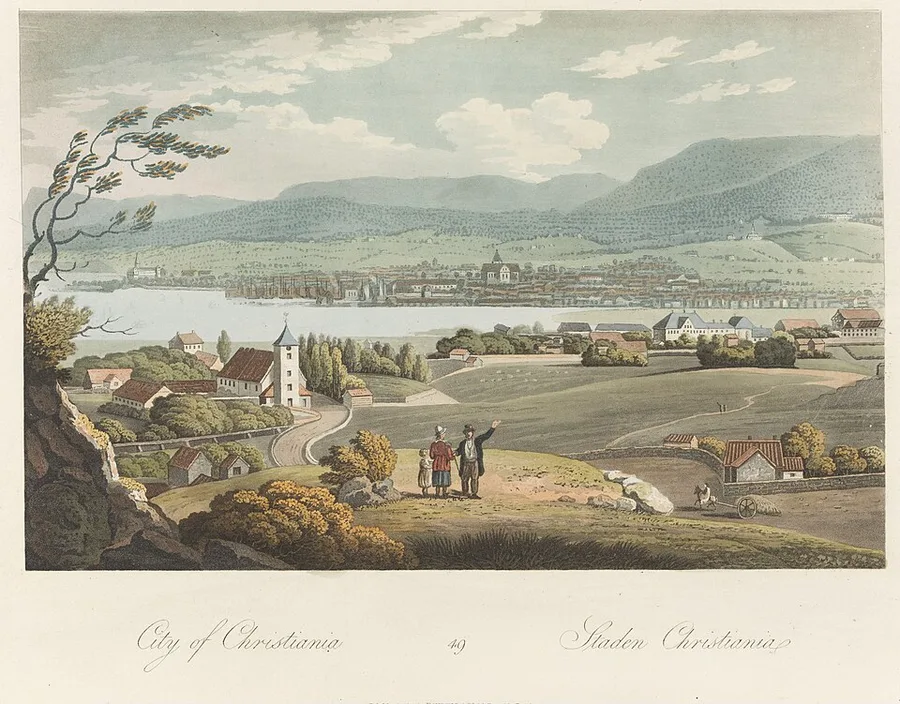 John William Edy, City of Christiania (1814), Boydell's Picturesque Scenery of Norway — National Museum of Art, Architecture and Design Edy drew the small capital a generation after Guro Paulsdotter's sentence — condemned to death in Bø, pardoned to hard labour, dead the next year in the town's *tukthus* (workhouse). This quiet town across the water is where the record of her ends. Capital of Norway from 1624 to 1925 — the rebuilt town that
King Christian IV laid out west of the medieval Oslo after
the fire of August 1624 destroyed the old city. Christian
founded the new town on a grid plan beneath Akershus
fortress, named it for himself, and ordered the surviving
Oslo burghers to move into it. Christiania was the
capital's name through the four-hundred-year night, the
brief war of 1814, the constitutional Eidsvoll moment, the
ninety-one-year personal union with Sweden, and the first
two decades of fully independent Norway after 1905. In 1877
the spelling was modernised to Kristiania; in 1925 the
city formally returned to the medieval name Oslo. The
Kvadraturen district preserves Christian IV's grid intact
today.
On the trip Days 1–2 in Oslo bring both groups through Christiania —
Christian IV's seventeenth-century planned grid, still
visible today as the Kvadraturen district just below
Akershus fortress.
Also discussed in The 400-Year Night — when the Northern Lion lay dormantLutheran Norway and Pietism — a farmer named Hans Nielsen Hauge and a lay revival that could not be silencedThe Constitution That Saved a Nation — five radical weeks at Eidsvoll, 1814800,000 Norwegians Leave — the century that built a Second NorwayThe Quiet Revolution — how Norway won its independence without a warWorld War II — the King’s “No” and the Nazis in NorwayNorske eventyr — the folk tales almost lost foreverStedssagn — local legends, told as warnings workhouse the next year, twenty-eight years old.
John William Edy, City of Christiania (1814), Boydell's Picturesque Scenery of Norway — National Museum of Art, Architecture and Design Edy drew the small capital a generation after Guro Paulsdotter's sentence — condemned to death in Bø, pardoned to hard labour, dead the next year in the town's *tukthus* (workhouse). This quiet town across the water is where the record of her ends. Capital of Norway from 1624 to 1925 — the rebuilt town that
King Christian IV laid out west of the medieval Oslo after
the fire of August 1624 destroyed the old city. Christian
founded the new town on a grid plan beneath Akershus
fortress, named it for himself, and ordered the surviving
Oslo burghers to move into it. Christiania was the
capital's name through the four-hundred-year night, the
brief war of 1814, the constitutional Eidsvoll moment, the
ninety-one-year personal union with Sweden, and the first
two decades of fully independent Norway after 1905. In 1877
the spelling was modernised to Kristiania; in 1925 the
city formally returned to the medieval name Oslo. The
Kvadraturen district preserves Christian IV's grid intact
today.
On the trip Days 1–2 in Oslo bring both groups through Christiania —
Christian IV's seventeenth-century planned grid, still
visible today as the Kvadraturen district just below
Akershus fortress.
Also discussed in The 400-Year Night — when the Northern Lion lay dormantLutheran Norway and Pietism — a farmer named Hans Nielsen Hauge and a lay revival that could not be silencedThe Constitution That Saved a Nation — five radical weeks at Eidsvoll, 1814800,000 Norwegians Leave — the century that built a Second NorwayThe Quiet Revolution — how Norway won its independence without a warWorld War II — the King’s “No” and the Nazis in NorwayNorske eventyr — the folk tales almost lost foreverStedssagn — local legends, told as warnings workhouse the next year, twenty-eight years old.