Public transit basics — Trains, trams, boats, and buying tickets
Oslo's T-bane, tram, and bus on a single ticket via the Ruter app. Vy trains for the long-distance runs, including the iconic Bergensbanen. Ferries on the western route. When transit beats driving (in cities, almost always).
Norwegian public transit is clean, punctual, and easy once two apps are on the phone. In the cities it is faster and far less stressful than driving.
Oslo runs on one ticket
Oslo’s transit is a single integrated system: the T-bane (subway), the trikk (tram), city buses, and the local commuter trains and harbor ferries within the Oslo zone are all covered by one ticket. A single ticket is good for 60 minutes and any number of transfers across all of those modes (each additional zone adds 30 minutes of validity).
Buy through Ruter 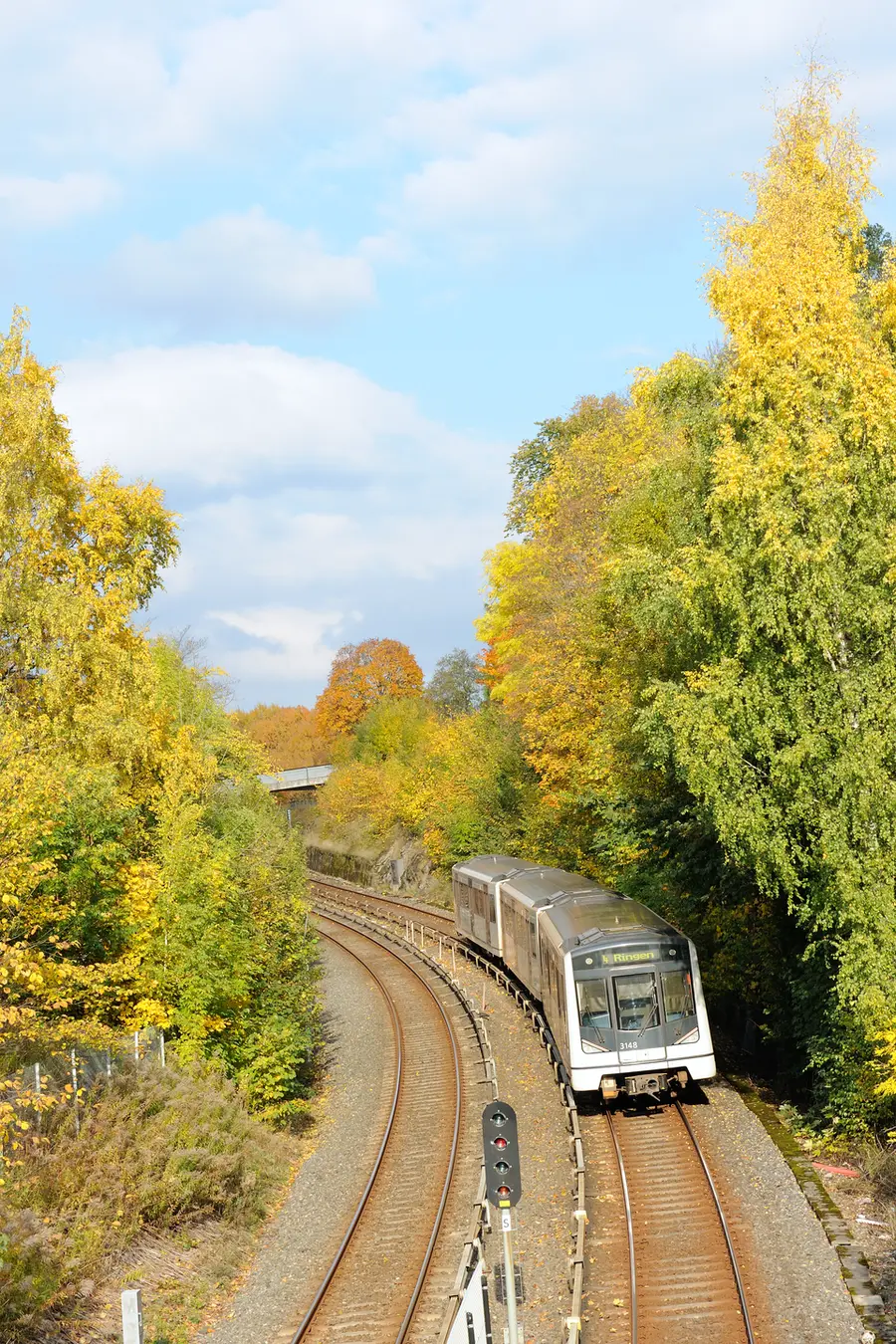 Tim Adams, CC BY 3.0, via Wikimedia Commons A T-bane train on the Sognsvannsbanen line near Blindern — the same single-ticket, single-authority network Ruter runs across Oslo's metro, trams, buses, and ferries. The public transport authority for Oslo and the surrounding Akershus region, formed on 1 January 2008 by the merger of Oslo Sporveier and Stor-Oslo Lokaltrafikk. Ruter does not operate vehicles itself — it plans routes, sets fares, and contracts operators such as Sporveien for the T-banen (metro) and Trikken (tram) networks — but a single Ruter ticket, sold through the Ruter app or station machines, covers the metro, tram, city buses, local trains, and harbor ferries within its zone on one fare, valid for an hour of transfers across every mode. On the trip Every Oslo transit ride the family takes on Days 1–2 — T-bane out to Holmenkollen, tram along the harbor, ferry out to Hovedøya — runs on the same Ruter ticket, tapped once and good for an hour of transfers across every mode along the way. Also discussed in Hotels in Norway — frokost, check-in, and the luggage-room habitPhones, data, and apps — staying connected and the apps worth loading — download it before arrival — or at the machines in stations. Approximate fares, worth verifying closer to the trip:
- Single ticket: ~42 NOK
- 24-hour pass: ~135 NOK
- 7-day pass: ~399 NOK
For a few days of getting around Oslo, the 24-hour passes or a 7-day pass usually beat buying singles.
The Vy app for long-distance trains
National rail tickets are bought through Vy 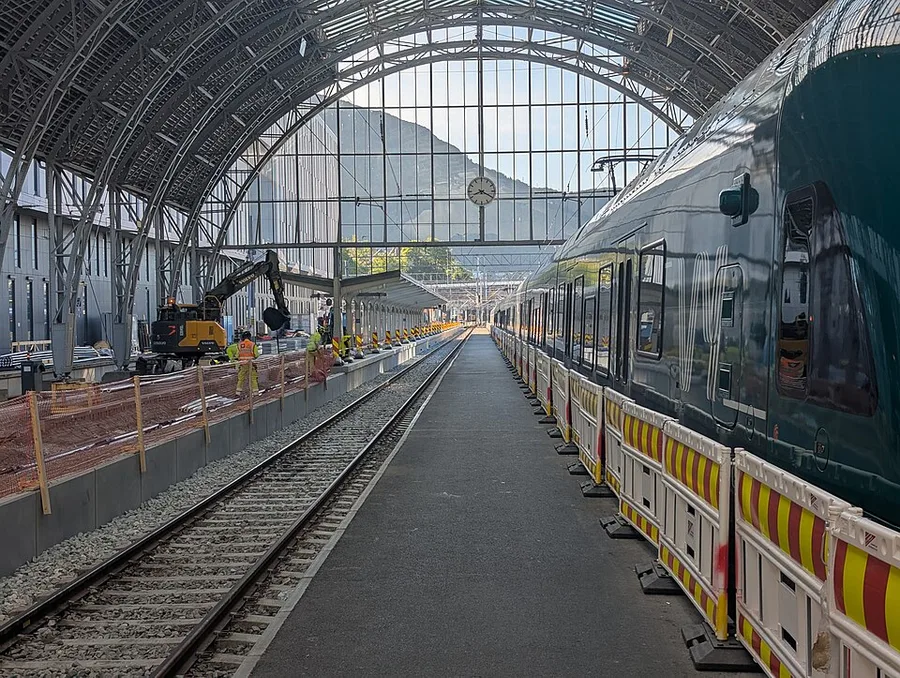 AleWi, CC BY-SA 4.0, via Wikimedia Commons A Vy-liveried train at Bergen station, the western terminus of the Bergensbanen line this card describes — the same dark-green corporate look, adopted in the 2019 rebrand, replaces the red paint scheme older Norwegians still associate with the former NSB name. Norway's state-owned passenger railway, renamed from Norges Statsbaner (NSB) to Vy on 24 April 2019 as part of a wider corporate rebrand ahead of the liberalization of the domestic rail market. Vy operates the great majority of Norway's long-distance and regional trains, including the Bergensbanen (Bergen Line) across the Hardangervidda plateau and the mainline service connecting to the Flåmsbana, alongside a network of buses under the same parent group. Tickets are sold through the Vy app and at station machines; some signage and older Norwegians still use the former name. On the trip Vy sells the Bergensbanen tickets that carry the Ungdommene (the Youngsters) out of Oslo across the Hardangervidda plateau to Myrdal on Day 3, the first leg of the Norway-in-a-Nutshell run to Bergen, and its regular trains are also the cheaper option off the plane at Gardermoen on arrival. Also discussed in Landing in Norway — off the plane in Oslo, where to go, step by stepHotels in Norway — frokost, check-in, and the luggage-room habitPhones, data, and apps — staying connected and the apps worth loadingThe stuff no one warns you about - Bathrooms, shoes off and plastic bags (Vy is the national rail operator, formerly NSB). This includes the Bergensbanen, the Oslo-to-Bergen line the Ungdommene (the Youngsters) ride on Day 3 as part of the Norway in a Nutshell journey. Window seats sell out — book the rail leg early, especially for the high scenic stretch across the Hardangervidda
 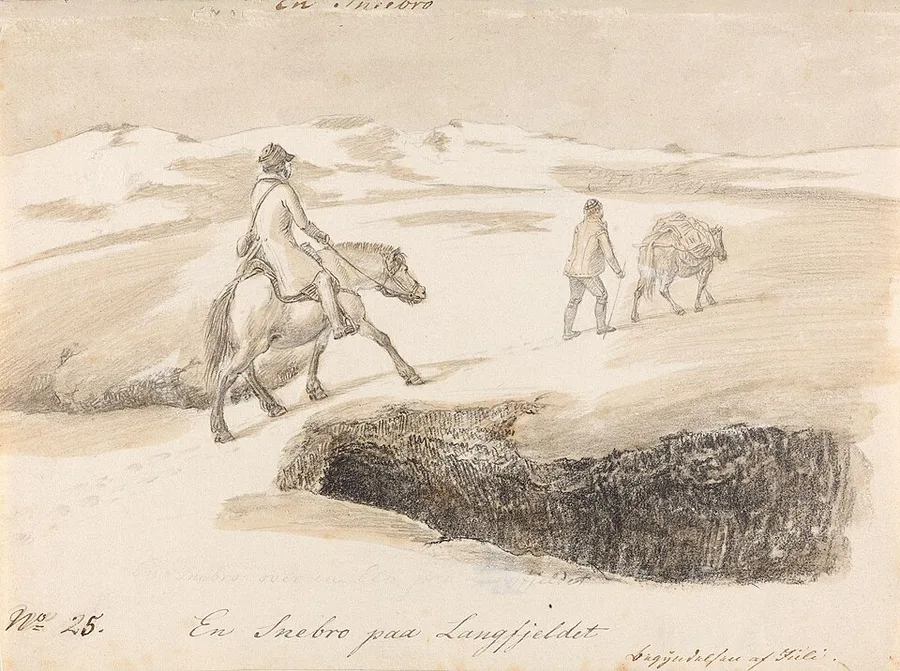 Johannes Flintoe (1822), Nasjonalmuseet, public domain Flintoe's 1822 sketch of a snow-bridge crossing on the bare high fells — the same open, snow-locked plateau the Bergensbanen climbs between Oslo and Bergen, the roof-of-Norway stretch that makes a window seat on the mountain crossing worth booking. The largest mountain plateau in northern Europe, covering
about 8,000 square kilometres across the highland between
Hardangerfjord, Numedal, and Telemark in central southern
Norway. Average elevation about 1,100 metres. A barren,
open landscape of moss, rock, and small lakes, snow-covered
most of the year. Through the medieval period and into the
modern era the plateau served as a summer pasture for the
surrounding valleys' livestock and a long-distance hiking
and reindeer-herding ground. The Norwegian Operation
Gunnerside team parachuted onto the plateau on 16 February
1943 and used its winter conditions and remoteness as the
base for the sabotage of the German heavy-water plant at
Vemork. Now Hardangervidda National Park (1981), Norway's
largest national park.
Also discussed in World War II — the King’s “No” and the Nazis in Norway .
Johannes Flintoe (1822), Nasjonalmuseet, public domain Flintoe's 1822 sketch of a snow-bridge crossing on the bare high fells — the same open, snow-locked plateau the Bergensbanen climbs between Oslo and Bergen, the roof-of-Norway stretch that makes a window seat on the mountain crossing worth booking. The largest mountain plateau in northern Europe, covering
about 8,000 square kilometres across the highland between
Hardangerfjord, Numedal, and Telemark in central southern
Norway. Average elevation about 1,100 metres. A barren,
open landscape of moss, rock, and small lakes, snow-covered
most of the year. Through the medieval period and into the
modern era the plateau served as a summer pasture for the
surrounding valleys' livestock and a long-distance hiking
and reindeer-herding ground. The Norwegian Operation
Gunnerside team parachuted onto the plateau on 16 February
1943 and used its winter conditions and remoteness as the
base for the sabotage of the German heavy-water plant at
Vemork. Now Hardangervidda National Park (1981), Norway's
largest national park.
Also discussed in World War II — the King’s “No” and the Nazis in Norway .
Riding the Bergensbanen
Oslo to Bergen takes roughly seven hours and climbs through the high mountains; it is regularly called one of the most scenic rail journeys in the world. A few practical notes: bring snacks, because the bistro car’s food is basic and pricey; and both sides have their moments — many riders favor the left-hand side leaving Oslo for the high Hardangervidda plateau, the right for the fjord run into Bergen. The Norway in a Nutshell package handles this booking, so the Ungdommene (the Youngsters) don’t need to arrange it separately.
Ferries on the western route
On the fjord coast, some ferries between towns are part of the road network rather than an optional extra — there is no way around them. The Norway in a Nutshell package includes its ferry legs pre-booked. For any independent travel on the west coast, check schedules at fjord1.no or norled.no. Ferries that take cars often read AutoPASS 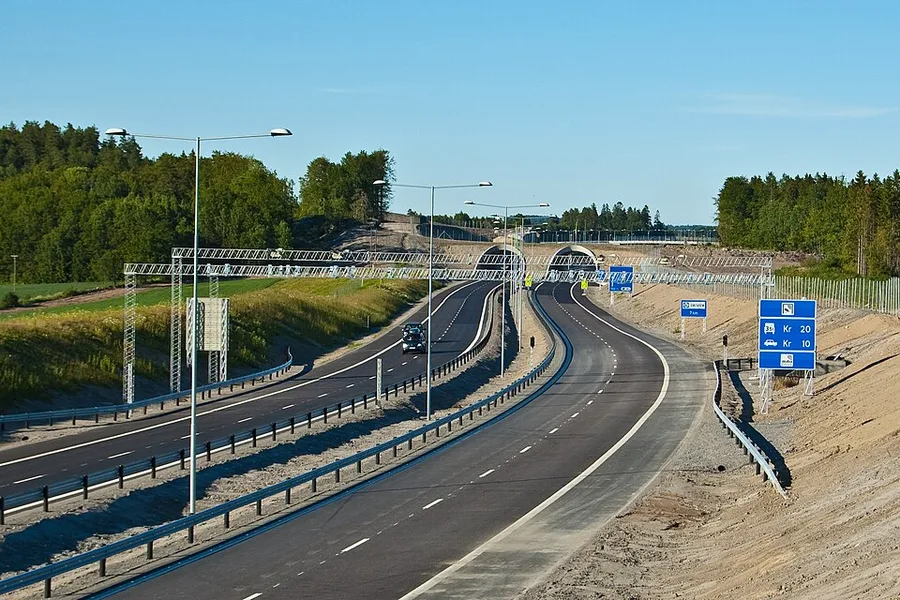 Peter Fiskerstrand, public domain, via Wikimedia Commons This is exactly the unmanned overhead gantry AutoPASS uses nationwide — no barrier, no ticket, no stop — reading a transponder or licence plate as the car passes underneath at full speed. Norway's nationwide electronic toll-collection system, standardized in 1999 and rolled out from 2001 by the Public Roads Administration to unify a patchwork of incompatible regional toll technologies. It reads a vehicle's registered AutoPASS transponder tag, or failing that its licence plate by camera, and bills the toll automatically — no barrier, no ticket, no cash, no stop at the gantry. One billing framework now covers every toll operator in the country, including the bomringer (toll rings) around Oslo, Bergen, and Trondheim and many rural road tolls; some car ferries read AutoPASS too. Rental cars are registered automatically, with charges passed through by the rental company, sometimes with a small handling fee. In this article The same self-collecting system that bills the road tolls also reads and bills the car ferries on the western route, without a stop at the ramp. On the trip AutoPASS quietly follows whichever car the Gråhårsklubben (the Oldsters) drive on the Slektsreisen (the family-lineage journey) leg north to Trondheim, Hegra, and Kylloplass — the gantries over the road and the toll-reading ferries on the fjord routes bill the rental automatically, with the charges arriving as one invoice after the tolls and crossings tally up. Also discussed in Driving in Norway — tolls, ferries, and a near-zero alcohol limit automatically and bill the vehicle, the same self-collecting toll system that runs on the roads.
When transit beats driving
Almost always, in the cities:
- Oslo — transit wins every time. Parking is expensive and scarce; transit is fast, frequent, and reaches everything worth reaching.
- Bergen — yes for the city center. Bryggen, the Fish Market, and the Fløibanen funicular are all walkable or a short transit hop.
- Trondheim — the center is walkable; transit covers the cathedral neighborhood.
- Lillehammer — walkable, with the Olympic park a short bus or taxi ride out.
- Outside the cities — for the Slektsreisen (the family-lineage journey) drive and the heritage country around Hegra and Kylloplass, driving wins by a wide margin. Rural transit is sparse.
Practical notes
- Download Ruter and Vy before landing. Both accept international phone numbers.
- Tap-to-pay contactless cards work as transit fares on some Oslo buses and trams, but the app is more flexible.
- Read the destination signs: Sentrum means city center; nord / sør / øst / vest are north / south / east / west.
- Norwegian trains are punctual to the minute. Be on the platform five minutes early — the train will not wait, and it will not be late.
- Train stations and ferry terminals usually have paid toilets (a small coin or card payment, 10–20 NOK). Free toilets are at most museums, in restaurants if you’re a patron, and in many shopping centers.