Stjørdal & Hegra
Two parish churches in the Stjørdal valley — Værnes, one of the oldest stone buildings in Norway, and the wooden church at Hegra — both still in use by the local parish.
Why this place
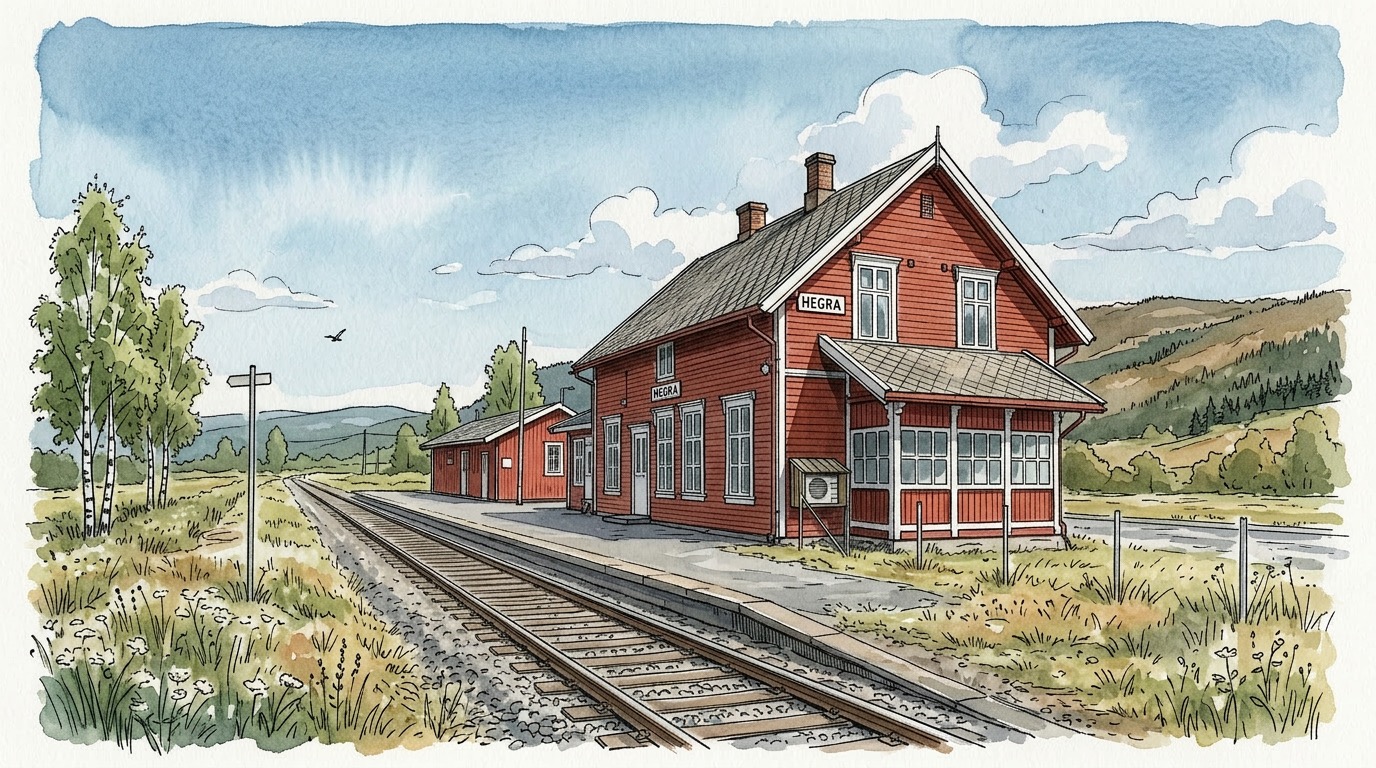
Stjørdal and Hegra sit a short way up the valley east of Trondheim, strung along the Stjørdalselva river. Between them they hold two of the older active parish churches in Trøndelag — one stone, one wood, one medieval, one eighteenth-century.
What happens here
The Gråhårsklubben (the Oldsters) drive out from Trondheim on Day 4 to walk both churchyards and continue upvalley to Kylloplass. The day is unhurried — most of it is spent walking ground rather than seeing sights.
- Værnes Church (Værnes kirke), just east of Trondheim Airport at Stjørdal, is one of the oldest standing stone buildings in Norway. It was built in stages across the eleventh and twelfth centuries, and is the most complete medieval sandstone church the country still has. Its wooden ceiling — a clear span of more than eleven metres — is the original from the 1100s, the only medieval church roof of its kind still in place anywhere in Norway. Runic inscriptions, carved stone figures, and faded wall paintings remain inside it.
- Hegra Church (Hegra kirke), further up the valley in the village of Hegra, is a white wooden church first built in 1783 and enlarged to a cross-church plan in 1875–77, seating roughly 400. It stands close to where older churches stood before it — records of a church at Hegra reach back to 1450, and the first was most likely a stave church.
Background
Both churches belong to the Diocese of Nidaros, the medieval church province centred on the cathedral in Trondheim; Værnes is the seat of the Stjørdal prosti (deanery). Norwegian parish registers reach back roughly four centuries, and a churchyard in a rural parish is not an abandoned place but a maintained one — names on the stones are often still the names in the surrounding farms.
The Stjørdal valley itself was one of the country’s earliest cultivated regions. Iron Age burial mounds sit on terraces above the river; the district’s medieval ting (thing) — the old open-air assembly where free men gathered to settle disputes and pass law — met here for centuries before parish administration replaced it. The word survives today in the name of Norway’s parliament, the Storting.
In Stjørdal & Hegra
Eat · Buy · Do
A short list of places to taste, things to bring home, and things to see.
Eat
Coming soon.
Do
-
Hegra Church — the white wooden church up the valley
A 1783 wooden parish church in the village of Hegra, standing on ground that has carried a church since at least 1450 — and a churchyard at the center of the family's heritage day.
-
Værnes Church — Norway's most complete medieval stone church
One of the oldest standing stone buildings in Norway, built in stages through the twelfth century — and the only medieval church in the country to still carry its original timber roof.
Learn more
Journals from Stjørdal & Hegra
No posts yet. During the trip, journal entries and photos from Stjørdal & Hegra will appear here.